SHOPPING CART

Mark Skullerud - Fine Artist

Mark Skullerud

Mark Skullerud

Coupeville, wa - United States

Summary: Cubism Meets Illustration 

Biography 

Statement of Intent 

Process 

Novelty 


Summary: Cubism Meets Illustration 


My paintings are rendered from graphite compositions that are not seen or imagined in advance. I prefer to say they come from the heart. Compositions drawn without forethought rely on the sensibilities of the artist more than on fidelity to real scenes and subjects. The process is akin to setting something loose. If purely representational art tries to capture real life, my work is about letting it go. 
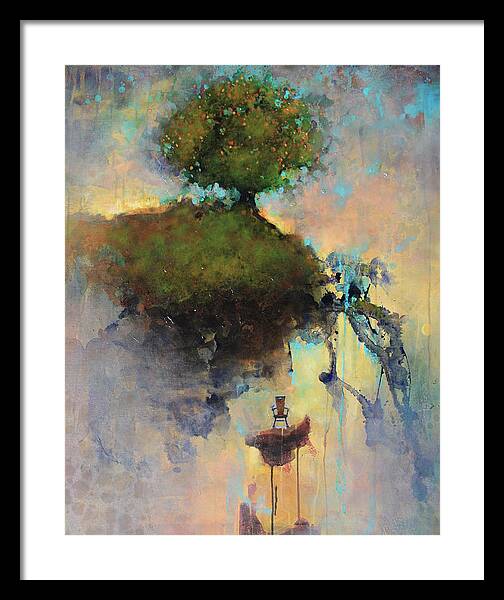
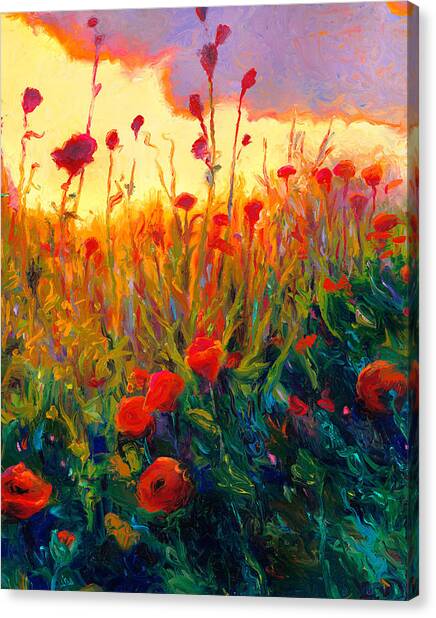
Oil, acrylic and gouache landscapes are based on unplanned compositions with clearly defined shapes. Stylized images suggest settings and objects, movement and environment. Interpretation requested. 


Biography

The abstract surreal style I paint in is the product of 33 years working in several consecutive and overlapping painting disciplines. Each of them presented fresh demands and provided experiences that have found their way into the work I paint today. 


My first job as a professional artist began in 1978 as an architectural illustrator for Walter Dorwin Teague, a national industrial design firm. Our office did interior design and exterior paint design for Boeing jets. To render a proposed interior convincingly, gouache paints were mixed to match the colors of individual threads so that the precise appearance of each fabric was faithfully produced. Perspective views for each composition were carefully constructed from scaled airplane drawings using traditional techniques handed down through the years. I learned to paint on the job and on the weekends. I paid my lead man Gene Connelly, an experienced automobile illustrator from Detroit, to tutor me in the mechanics of color and brush technique.


In 1982 I opened the Skullerud Studio and applied the photo realistic style of painting I learned at Teague to residential architecture, landscapes, and the depiction of things that did not exist – science fiction. Winning a regional Best of Show award in my first sf competition in 1983, I went on to gain awards in Boston, and cities in the West such as Seattle and Portland. I produced five illustrations for Amazing Stories magazine, the world’s longest continuously published science fiction magazine. These open-ended assignments pulled the cork on my imagination and were responsible for expanding the territory of what I could envision. 


My focus turned further from the literal in the late 1980’s to include surrealism and its examination of the character of human existence found in myth and dream imagery. As an associate and later a member of the Dharmic Engineers, a group of Northwest painters exploring the interface of Eastern and Western philosophy, my work addressed fundamental questions surrounding nature of mind, reality, and existence. The influence of mythologist Joseph Campbell featured prominently in compositions that sought to reach beyond the intellect.


In the early 1990’s California and French impressionist paintings caught my attention by virtue of a vitality that wasn’t intrinsic to the landscapes or people they portrayed. The intangibles in these paintings were the character and heart of the artist who felt the world of light as a visceral experience rather than intellectual or photorealistic opportunity. This seemed like a step in the right direction for me. I worked for the better part of the decade painting the seasonal, diurnal sensations of light on eyes and skin.


In the late nineties I ventured into abstraction, severing all connections to the literal world. More than any other style, abstraction pointed to the complexity of being alive as a nonphysical force in a physical body. And, unlike previous disciplines that were concerned with capturing something, I had to learn to let go of conceptual planning and subject. This was a signal change. It meant beginning each painting as a novice in a trade-off of control for intelligent instinct. All the assists of other disciplines, such as horizon line, light source and cast shadow, gravity – all these helps were gone. I traded in everything I knew for a set of crayons. Four or five years of work in several mediums passed by before I produced anything worth showing. Mixed media, consisting of acrylic background with prisma pencil overlay, was my key to this new world, chiefly because the slowness of pencil allowed for an internal language to develop at its own pace.


By the early 2000’s I had lived without realism long enough to entertain small doses of it in my current work. The difference now was the subordination of representation to the greater, native expression. And the nature of that expression is freedom from the ideas and ideals that force a given mental interpretation. Simply put, the image is set free on canvas, not captured as it was seen or imagined beforehand. Because the ambiguity is clearly defined in a harmonious environment, mystery and uncertainty cease to be threatening. Viewing becomes play. Conclusions are relinquished for ongoing engagement with an image that is never completely understood and never needs to be. 


Statement of Intent

Art that is planned has its roots in thinking. My compositions are not planned. I prefer to say they come from the heart. They can’t teach, instruct or demonstrate because there is no forethought. I’m really trying to set something loose. If purely representational art tries to capture real life, my work is about letting it go - letting go of expectations and conventions, the baggage we’ve picked up in the first half of life.


Creating a composition is both simple and difficult. I let the pencil wander over the page and, like a road crew at work, a project begins to take shape. One form leads to another. Something unfolds, another thing is erased, until at some undisclosed moment, the pencil comes to rest and the composition is complete. It may be abstract. It may represent something familiar in an unfamiliar way. It’s always a surprise. 


Once the composition settles down, I follow it with at least one painted color sketch, then a finished canvas. The final choice of colors and painting technique are thought out, but the composition, like a dream, remains a product of the unconscious.


As a personal experience, the unplanned painting is as different from the planned painting as night and day. It’s an appealing difference and a liberating one. It’s different for the viewer too because, like the territory of its origin, it is never completely understood. 


Process

Most people are surprised to hear how much time it takes to draw a composition. I start with a visual pattern that has no intrinsic meaning, then work small areas into the foreground and background, lightening and darkening, by gut instinct and experience. After a while, sometimes a long while, the drawing begins to suggest something. Not until this point does any conscious intention come into the process. Subsequent drawing gives definition to subject and surroundings so that once random visual elements now feel as if they belong together. When the composition has clarity, ambiguity, and balance, it's finished.


The drawing is followed by at least one, and sometimes as many as seven color studies, usually done in gouache, an opaque watercolor. These are small paintings less than 12 inches in size that are finished pieces in their own right. It is on these pieces that the problems of color palette, color balance, and technique are explored. They serve as broad roadmaps to the final oil or acrylic paintings. Color studies have titles that include the letter 'S' followed by a number. I feel no compulsion to follow the color study slavishly, making changes in color and composition freely. If it works, the final expresses both the spontaneity of its origin and intentional fine-tuning of the artist. 


Novelty

Novel shapes and compositions require an experience that is something less than ordinary. 


Most representational art starts with an idea or concept from real life or the imagination, which the artist then renders. See a boat, paint a boat. When I moved to abstraction, I learned to do without this starting point. More than anything, this reorientation makes abstract painting a different kind of experience, a process of an entirely different order than what I was accustomed to. Letting the body and unconscious take over, at least in the initial stages, took a certain amount of faith that something more than air would emerge, and that this something would be worth looking at.


It was not an issue of craftsmanship. It had more to do withcharacter. The desire to capture, teach, instruct, illustrate - all that had to go. And like all habits, it's hard to break. It is second nature to bring our creations in line with our own thinking, a habit so deeply ingrained we're hardly aware of it anymore, like putting keys in the ignition. Given free reign, the intellect would paint the same painting over and over again. 


One requirement I found for letting go of the intellect was to develop a tolerance for confusion and imbalance. The intellect is a bulldozer that takes over at the least opportunity to make something out of nothing by forcing everything in line immediately and without remorse. This 'line' is different for everyone, but everybody has one. By showing a little tolerance, the critical faculty gets postponed long enough for novel compositions to develop beyond what the conscious intellect has in mind. It is a case of less is better. 


Even so, I personally enjoy a suggestion of reality in my work. Starting with a natural pattern, a scribble, a stain, or some other random pattern, I develop the composition almost completely before looking at it with a critical eye and asking, 'What does this look like?' The drawing develops a bit more as the representational shapes are clarified. The end result may be abstract. It may represent something familiar in an unfamiliar way. It's always a surprise.


mark a. skullerud


Paintings

31 Images

Drawings

22 Images


Artwork Feed

Blog Feed

Calendar Feed

Website Designed by Fine Art America / Artist Websites - Copyright © 2012 FineArtAmerica.com - All Rights Reserved